How do we learn about what is screened and hidden from view? And, when what lies behind these screens can be so hard to come to terms with, how can we better understand the stories that help us see it?
Over the past five decades, Ireland has published a number of state reports detailing endemic problems with its institutions of coercive confinement. Parallel to this official discourse, writers, dramatists, documentary makers, filmmakers and visual artists have produced an important body of work that exposes these institutional abuses as well as the ways in which they often remain unseen. These creators make visible coercive confinement – in other words, they screen it – in order show us how it has remained invisible, or screened, in Irish society.
Screening Coercive Confinement: Ireland’s institutions in word and image is a digital exhibition created by Dr James Little in collaboration with the Museum of Literature Ireland. The exhibition features the work of six creators who have made coercive confinement visible – from industrial and day schools, to psychiatric hospitals, to centres of direct provision. In this podcast series, we feature in-depth interviews with each artist.
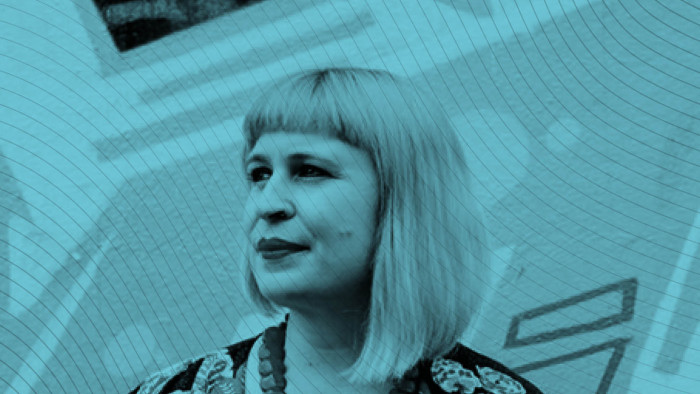
Vukašin Nedeljković created Asylum Archive (www.asylumarchive.com) by documenting Ireland’s system of direct provision centres in images. In this episode, Vukašin discusses the origins of Asylum Archive in a direct provision centre in Ballyhaunis, Co. Mayo, how it grew into a multimodal platform preserved by the Digital Repository of Ireland as well as the challenges facing those seeking asylum and international protection in Ireland today.
This project was funded by the EU and mentored by Prof. Emilie Pine at UCD’s School of English, Drama and Film. MoLI’s digital programme is supported by Ebow Digital. This podcast was produced by Ian Dunphy and Benedict Schlepper-Connolly.